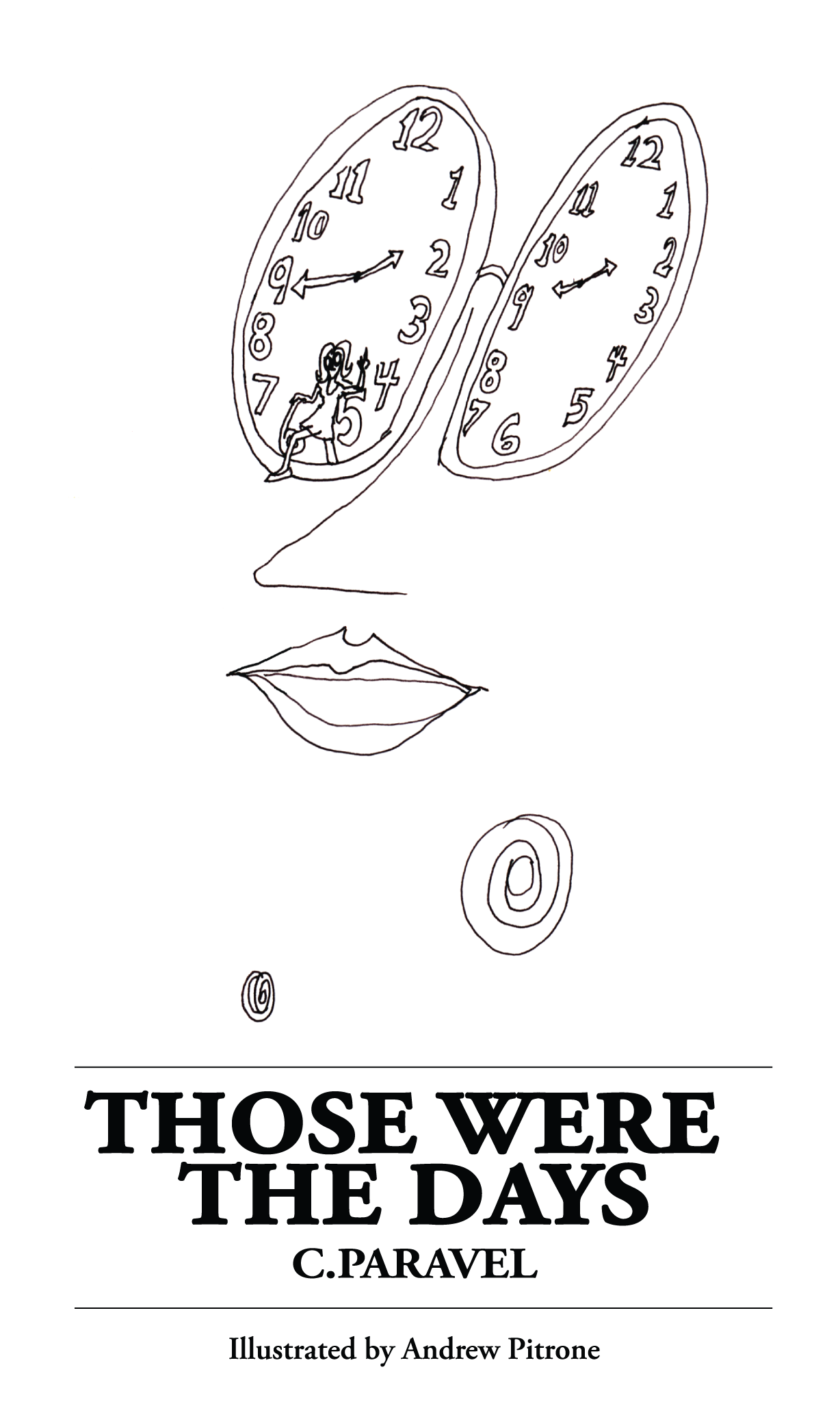
Is time speeding up?
Share your experiences on the wall of time.
One part book. One part journal.
Get it starting November 18, 2026.
In Those Were the Days, Caira Paravel blends dark humor and speculative fiction in a story of vintage clocks, modern exhaustion, and a disturbing suspicion: time itself is speeding up.
In San Francisco, a cuckoo clock received as a gift won’t keep time. A pristine vintage kitchen clock is listed for just three dollars. Thrift stores seem to be overflowing with discarded analog clocks. For one increasingly exhausted artist and collector, these aren’t bargains. They might be evidence that time itself is speeding up.
Soon, everything starts looking suspicious, from disappearing craftsmanship to a societal push for “life hacks” where the quality falls behind productivity. Is there a connection between why we are forced to embrace technologies that promise to save time but still leave us exhausted? There is a saying that getting older makes the days feel shorter, but what if the days don’t just feel shorter; they actually are shorter?
As nostalgia turns into a wave of anxiety, the narrator is consumed by the need to tell someone, anyone, what is happening. But how do you warn your friends that time might be running out, without sounding like you’ve completely lost your mind?
Darkly funny, intimate, and disquietingly familiar, Caira Paravel’s Those Were the Days is a work of speculative fiction about art, nostalgia, and the strange business of being human in an accelerating age.
The second half of the book encourages people to mark their own experiences with time, with lined journal pages featuring additional illustrations from artist Andrew Pitrone.